Commercial Computer Recycling WEEE-Compliant IT Disposal for UK Businesses
As businesses upgrade their technology to stay competitive, old computers, laptops, servers, and other IT equipment quickly become obsolete. But simply discarding outdated devices can expose sensitive data, create environmental risks, and lead to compliance issues. Commercial computer recycling provides a secure and responsible solution, helping organizations protect confidential information, meet UK regulatory requirements, and reduce their environmental impact through proper IT asset disposal and recycling.
Whether you’re an IT manager overseeing a hardware refresh, a school upgrading computer labs, a healthcare provider replacing workstations, or a business seeking secure data destruction services, choosing a professional commercial computer recycling provider is essential. A trusted IT recycling company can help with secure disposal, WEEE compliance, asset recovery, and certified data destruction while supporting sustainability goals.
What Is Commercial Computer Recycling?
Commercial computer recycling is the process of collecting, processing, reusing, refurbishing, or recycling business IT equipment in a secure and environmentally responsible manner. Unlike household recycling, commercial computer recycling involves strict procedures for data security, asset tracking, regulatory compliance, and electronic waste management.
Organizations commonly recycle:
- Desktop computers
- Business laptops
- Servers
- Monitors
- Printers
- Networking equipment
- Storage devices
- Data center hardware
Professional computer recycling services ensure that equipment is handled safely while maximizing opportunities for reuse, refurbishment, and material recovery.
How Commercial Computer Recycling Differs from Household Recycling
Household recycling programs are designed for consumers and generally do not provide the security, documentation, or compliance requirements that businesses need.
Business computer recycling often includes:
- Secure data destruction
- Asset reporting and certificates
- Chain-of-custody documentation
- WEEE-compliant recycling
- IT asset disposal (ITAD) services
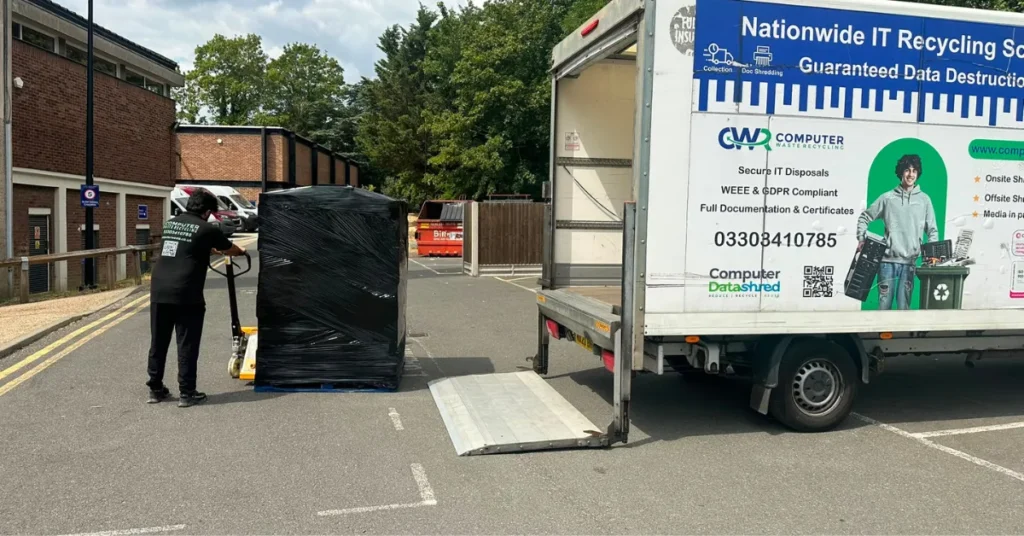
- Collection and transportation services
- Environmental compliance reporting
For organizations handling sensitive information, professional commercial IT recycling provides significantly greater protection than standard recycling options.
Why Businesses Need Professional IT Recycling Services
Professional IT recycling services help businesses manage end-of-life technology while reducing risk. Improper disposal can result in data breaches, compliance violations, and environmental harm.
A specialist business IT recycling company provides:
- Secure computer recycling
- Hard drive destruction services
- Certified data erasure
- Asset recovery opportunities
- Responsible IT disposal
- Nationwide IT recycling solutions
These services are especially important for schools, councils, healthcare organizations, financial institutions, and corporations handling confidential data.
Why Commercial Computer Recycling Is Important for UK Businesses
Commercial computer recycling near me UK services provide a structured approach to disposing of technology assets while meeting legal, security, and sustainability requirements.
Protecting Sensitive Business Data
One of the biggest risks associated with old computers is residual data. Even deleted files may remain recoverable if storage devices are not properly sanitized.
Professional secure data destruction services help prevent unauthorized access to:
- Customer records
- Financial information
- Employee data
- Business contracts
- Intellectual property
Through certified data erasure and hard drive destruction, businesses can confidently retire obsolete equipment without exposing sensitive information.
Meeting Environmental Responsibilities
Electronic waste is one of the fastest-growing waste streams globally. Computers contain valuable materials that can be recovered and reused, but they may also contain substances requiring specialist handling.
WEEE-compliant recycling ensures that electronic equipment is processed responsibly, minimizing environmental impact and supporting sustainability initiatives.
Reducing E-Waste Through Responsible Recycling
Responsible electronic waste recycling helps divert equipment from landfill and contributes to a circular economy.
Rather than disposing of devices as waste, professional technology recycling companies evaluate opportunities for:
- Refurbishment
- Reuse
- Asset recovery
- Component harvesting
- Material recycling
This approach reduces waste while maximizing resource efficiency.
Understanding WEEE Compliance for Business IT Disposal
WEEE compliance is a fundamental aspect of business IT disposal in the UK.
What Are the UK WEEE Regulations?
The Waste Electrical and Electronic Equipment (WEEE) Regulations are designed to reduce the environmental impact of electronic waste and encourage responsible recycling.
These regulations apply to many types of IT equipment, including:
WEEE recycling helps ensure that equipment is managed safely throughout the disposal process.
Business Responsibilities Under WEEE
Organizations have a responsibility to ensure that electronic waste is disposed of correctly.
This includes:
- Using authorized recycling providers
- Maintaining environmental compliance
- Ensuring proper treatment of electronic waste
- Keeping relevant disposal records
Professional business IT disposal providers help organizations meet these obligations efficiently.
Risks of Non-Compliant Computer Disposal
Improper computer disposal can result in:
- Data security risks
- Regulatory issues
- Environmental damage
- Reputational harm
Choosing a certified computer recycling provider significantly reduces these risks.
How the Commercial Computer Recycling Process Works
Commercial IT recycling follows a structured process designed to protect data, ensure compliance, and maximize sustainability outcomes.
Collection and Inventory Audit
The process often begins with equipment collection and asset auditing.
Each item is recorded and assessed, providing businesses with clear visibility of:
- Equipment types
- Asset quantities
- Serial numbers
- Collection records
This forms the foundation of effective IT asset disposal.
Asset Tracking and Chain of Custody
Asset tracking helps maintain accountability throughout the recycling process.
A documented chain of custody ensures equipment remains secure from collection through final processing.
This level of transparency is especially important for regulated industries.
Secure Data Erasure and Destruction
Data security is a core component .
Methods may include:
- Certified data erasure
- Hard drive shredding
- Physical destruction
- Secure disposal procedures
These processes help ensure that information cannot be recovered.
Refurbishment, Reuse, and Asset Recovery
Not all retired equipment must be recycled immediately.
Many devices can be:
- Refurbished
- Redeployed
- Resold
- Donated
Asset recovery can help organizations extract value from surplus IT equipment.
Material Recovery and Responsible Recycling
When reuse is not possible, materials such as metals, plastics, and electronic components are recovered for recycling.
This reduces waste and supports environmental sustainability.
Secure Data Destruction
Secure data destruction is often the most important consideration when disposing of business technology.
Data Erasure vs Hard Drive Destruction
Both methods provide protection, but they serve different purposes.
Data Erasure
- Removes data using specialized software
- Allows potential reuse of storage devices
- Supports refurbishment initiatives
Hard Drive Destruction
- Physically destroys storage media
- Prevents future reuse
- Provides maximum security
The appropriate approach depends on business requirements and risk levels.
GDPR and Data Security Requirements
Organizations handling personal information must ensure that retired devices do not expose data.
Secure disposal processes support GDPR compliance by reducing the risk of unauthorized access to sensitive information.
Certificates of Destruction and Audit Reports
Many organizations require documented proof of secure disposal.
Professional providers often issue:
- Certificates of destruction
- Asset reports
- Audit trails
- Compliance documentation
These records can support internal governance and regulatory requirements.
IT Asset Disposal (ITAD): Beyond Basic Computer Recycling
IT asset disposal goes beyond traditional recycling by incorporating security, value recovery, and lifecycle management.
What Is IT Asset Disposal?
IT asset disposal (ITAD) refers to the structured management of end-of-life technology assets.
ITAD services typically include:
- Equipment collection
- Asset tracking
- Data destruction
- Refurbishment
- Recycling
- Reporting
Benefits of Professional ITAD Services
Professional IT asset disposal services help organizations:
- Reduce security risks
- Recover asset value
- Improve compliance
- Simplify equipment replacement projects
- Support sustainability goals
IT Lifecycle Management and End-of-Life Equipment
Effective IT lifecycle management considers the entire lifespan of technology assets.
When equipment reaches end-of-life, responsible IT disposal ensures that devices are managed securely and sustainably.
Types of Equipment Accepted
Business computer recycling services typically handle a wide range of equipment.
Desktop Computer Recycling
Desktop computers remain common in offices and can often be refurbished or recycled efficiently.
Business Laptop Recycling
Laptop recycling is increasingly important as organizations adopt mobile work environments.
Server Recycling and Disposal
Server disposal requires careful handling due to data storage and infrastructure considerations.
Monitor Recycling
Monitors contain valuable materials that can often be recovered through specialist recycling processes.
Printer Recycling
Printer recycling helps organizations manage obsolete printing equipment responsibly.
Networking Equipment Recycling
Switches, routers, firewalls, and other networking devices can also be processed through computer recycling programs.
Key Benefits of Commercial Computer Recycling Services
Improved Data Security
Secure IT disposal protects confidential information and reduces cybersecurity risks.
Regulatory Compliance
Professional services support WEEE compliance and broader environmental compliance requirements.
Sustainability and ESG Support
Commercial computer recycling contributes to environmental, social, and governance (ESG) objectives.
Asset Value Recovery
Asset recovery programs may generate value from retired equipment through refurbishment and resale.
Reduced Environmental Impact
Supporting a circular economy helps reduce waste and conserve resources.
How to Choose a Commercial Computer Recycling Company in the UK
Selecting the right computer recycling company is essential.
Certifications and Accreditations to Look For
Look for providers with recognized certifications demonstrating quality, security, and environmental management.
Nationwide Collection Services
Businesses operating across multiple locations may benefit from nationwide IT recycling services.
Locations often served include:
- Commercial computer recycling London
- Commercial computer recycling Manchester
- Commercial computer recycling Birmingham
- Commercial computer recycling Leeds
- Commercial computer recycling Glasgow
- Commercial computer recycling Bristol
- Commercial computer recycling Liverpool
- Commercial computer recycling Sheffield
- Commercial computer recycling Nottingham
- Commercial computer recycling Edinburgh
Data Destruction Capabilities
Evaluate the provider’s approach to secure data destruction and hard drive destruction services.
Reporting, Audit Trails, and Documentation
Comprehensive reporting helps businesses maintain accountability and compliance records.
Commercial Computer Recycling Costs: What Businesses Should Expect
Costs vary depending on the volume and type of equipment being processed.
Factors That Affect Recycling Costs
Common factors include:
- Quantity of assets
- Equipment type
- Collection requirements
- Data destruction needs
- Geographic location
- Reporting requirements
When IT Equipment May Have Resale Value
Modern devices in good condition may qualify for asset recovery programs that offset disposal costs.
Commercial Computer Recycling and Sustainability Goals
Commercial IT recycling plays an important role in corporate sustainability strategies.
Supporting the Circular Economy
Reusing and refurbishing equipment extends product lifecycles and reduces waste generation.
Reducing Electronic Waste in the UK
Electronic waste recycling helps reduce landfill dependency and supports responsible resource management.
Achieving Corporate ESG Objectives
Businesses increasingly prioritize sustainability initiatives, and responsible technology recycling aligns closely with these goals.
Conclusion: Why Commercial Computer Recycling Matters for Modern Businesses
Commercial computer recycling helps businesses securely dispose of outdated IT equipment while ensuring WEEE compliance, protecting sensitive data, and reducing electronic waste. By working with a trusted IT recycling provider, organizations can support sustainability goals, recover asset value, and manage end-of-life technology responsibly.
Frequently Asked Questions About Commercial Computer Recycling
What is commercial computer recycling?
Commercial computer recycling is the secure disposal, refurbishment, and recycling of business IT equipment such as computers, laptops, and servers.
How do businesses recycle old computers?
Businesses typically use professional IT recycling services that provide collection, secure data destruction, and environmentally responsible recycling.
Is commercial computer recycling secure?
Yes. Reputable providers use certified data erasure, hard drive destruction, and secure handling processes to protect sensitive information.
What is WEEE compliance?
WEEE compliance ensures that electrical and electronic equipment is disposed of and recycled according to UK environmental regulations.
Do recycling companies provide certificates of destruction?
Yes. Many IT recycling companies provide certificates of destruction and asset reports as proof of secure data disposal.
Computer Waste Recycling
03303410785
46 Jellicoe Rd, Leicester LE5 4FN, United Kingdom