How to Recycle Old Office IT Equipment in the UK
Every year, thousands of UK businesses replace computers, laptops, servers, monitors, printers, and other technology. While upgrading equipment helps improve productivity, it also creates a growing challenge: electronic waste.
Knowing how to recycle old office IT equipment correctly is essential for protecting sensitive business data, complying with UK regulations, and reducing environmental impact. Simply placing old devices in general waste can create legal risks and contribute to landfill waste.
This guide explains everything businesses need to know about office IT equipment recycling, including WEEE compliance, secure data destruction, IT asset disposal (ITAD), and sustainable recycling practices.
What Is Office IT Equipment Recycling?
Office IT equipment recycling is the process of collecting, processing, refurbishing, reusing, or recycling unwanted technology assets in an environmentally responsible manner.
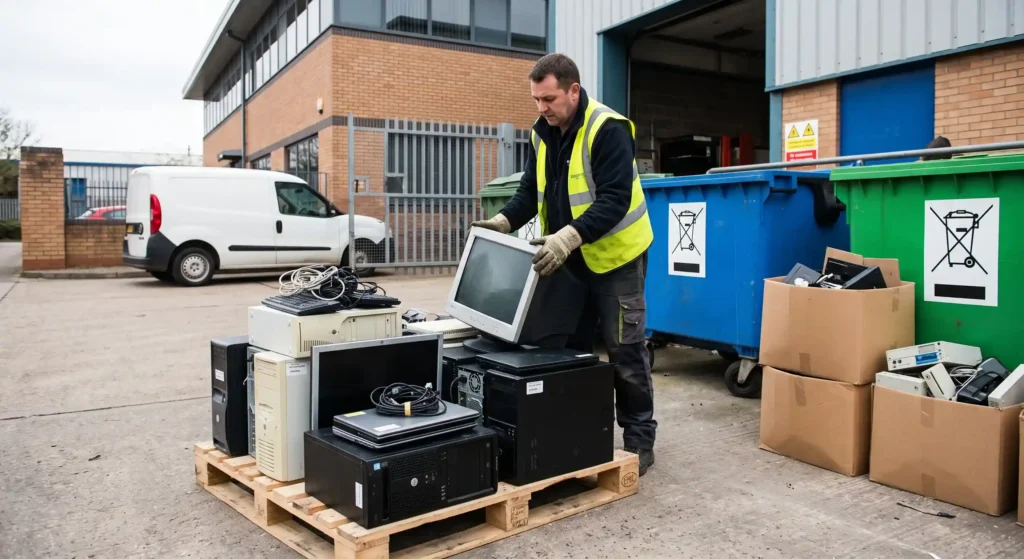
Businesses generate a wide range of electronic waste, including:
- Desktop computers
- Laptops
- Servers
- Monitors
- Printers
- Mobile phones
- Tablets
- Networking equipment
- Storage devices
- Telecoms equipment
Professional office IT equipment recycling ensures that valuable materials are recovered while preventing hazardous components from entering landfill sites.
Why Businesses Need a Recycling Strategy
Without a clear recycling strategy, organisations may face:
- Data security risks
- Environmental compliance issues
- Increased disposal costs
- Missed opportunities for asset recovery
- Potential breaches of WEEE Regulations
A structured business IT recycling process helps organisations manage technology assets responsibly throughout their lifecycle.
Why Businesses Should Recycle Old Office IT Equipment
Environmental Benefits of E-Waste Recycling
Electronic waste contains valuable resources such as aluminium, copper, steel, and precious metals. Recycling helps recover these materials and reduces the need for raw material extraction.
Electronic waste recycling also prevents harmful substances from contaminating soil and water systems.
Reducing Landfill Waste
Many IT devices contain components that can be reused, refurbished, or recycled. Proper office electronics disposal keeps these materials out of landfill and supports long-term environmental goals.
Supporting Sustainability Goals
Many UK organisations now include sustainability targets within their corporate strategies. Responsible IT equipment recycling UK services can help businesses reduce their environmental footprint and support ESG initiatives.
Contributing to the Circular Economy
A circular economy focuses on extending the life of products through repair, refurbishment, reuse, and recycling. Instead of discarding old devices, businesses can maximise value while reducing waste.
Understanding WEEE Regulations for Businesses in the UK
The Waste Electrical and Electronic Equipment (WEEE) Regulations were introduced to reduce the environmental impact of electronic waste and encourage responsible disposal practices. Businesses handling electronic waste must ensure it is managed correctly and processed through authorised channels.
What Is WEEE?
WEEE stands for Waste Electrical and Electronic Equipment. It refers to electrical and electronic products that have reached the end of their useful life and require proper disposal or recycling.
Business Responsibilities Under WEEE
Businesses must:
- Dispose of electronic waste responsibly
- Use authorised recycling providers
- Maintain waste transfer documentation
- Follow environmental compliance requirements
- Ensure proper handling of hazardous materials
Penalties for Non-Compliance
Failing to comply with WEEE requirements can result in regulatory action and reputational damage. Businesses should work with certified recycling providers to maintain compliance.
Choosing a WEEE-Compliant Recycling Provider
A professional provider should offer:
- WEEE compliant recycling
- Secure transportation
- Asset tracking
- Data destruction certification
- Environmental reporting
Step 1 – Conduct an IT Asset Audit
Before recycling any equipment, perform a comprehensive asset audit.
Create an Inventory of Equipment
Document all assets scheduled for disposal, including:
- Asset numbers
- Device types
- Serial numbers
- Storage capacity
- Condition
Identify Reusable Assets
Some equipment may still have value through refurbishment or resale.
Separate Working and Non-Working Devices
Categorising equipment simplifies processing and helps maximise recovery opportunities.
Document Asset Information
Accurate records support IT asset management and provide a clear chain of custody.
Step 2 – Securely Remove Sensitive Data Before Recycling
Data security should always be a top priority.
Why Data Security Matters
Old computers often contain:
- Customer records
- Employee information
- Financial data
- Intellectual property
- Confidential communications
Without proper data destruction, businesses may expose themselves to significant security risks.
UK GDPR Requirements
UK GDPR and the Data Protection Act 2018 require organisations to handle personal data securely throughout its lifecycle. Secure disposal forms part of those responsibilities.
Data Wiping Methods
Professional recyclers often use certified software to erase data from:
- Hard drives
- SSDs
- Mobile devices
- Servers
Many providers follow recognised standards such as NIST 800-88 for secure data sanitisation.
Hard Drive Destruction
Where devices cannot be securely wiped, physical destruction may be necessary. Hard drive destruction ensures information cannot be recovered.
Certificates of Data Destruction
Businesses should request documentation confirming that data destruction has been completed successfully.
Step 3 – Decide Between Reuse, Refurbishment, Donation, or Recycling
Not every device needs to be recycled immediately.
When to Reuse Equipment
Functional devices may be redeployed internally or used in less demanding roles.
Benefits of Refurbishment
Equipment refurbishment extends device lifespan and reduces electronic waste.
Benefits include:
- Lower replacement costs
- Reduced environmental impact
- Increased asset value recovery
Donating Old Office Computers
Many organisations donate refurbished computers to schools, charities, and community groups.
When Recycling Is the Best Option
If equipment is obsolete, damaged, or uneconomical to repair, recycling is often the most practical option.
Step 4 – Choose a Certified IT Recycling Company
Selecting the right provider is critical.
Certifications to Look For
Look for companies that offer:
- WEEE compliance
- Environmental management systems
- Secure data destruction
- Asset tracking
- Regulatory compliance support
Questions to Ask an IT Recycler
Before engaging a provider, ask:
- Do you provide certificates of destruction?
- Are collections available nationwide?
- How is equipment transported?
- What happens to reusable assets?
- Do you provide reporting documentation?
Collection and Logistics Services
Many IT recycling services UK providers offer secure nationwide collections, asset inventories, and chain-of-custody tracking.
Reporting and Compliance Documentation
Professional recyclers typically provide:
- Asset reports
- Waste transfer notes
- Data destruction certificates
- Compliance documentation
Book a Secure IT Recycling Collection
If your business is upgrading equipment, relocating offices, or clearing storage space, now is the ideal time to arrange a secure collection. Working with a certified IT recycling company can help you protect sensitive data, maintain compliance, and support sustainability goals.
Request a free IT recycling assessment and discover the safest disposal option for your organisation.
What Happens During the IT Recycling Process?
Collection
Equipment is collected and transported securely.
Sorting and Testing
Devices are assessed to determine whether they can be reused, refurbished, or recycled.
Refurbishment
Working devices may be repaired and prepared for reuse.
Material Recovery
Components such as metals, plastics, and circuit boards are separated for recycling.
Responsible Disposal
Remaining materials are processed according to environmental regulations.
Common Office Equipment That Can Be Recycled
| Equipment Type | Recyclable | Special Handling Required |
| Desktop PCs | Yes | Data Removal |
| Laptops | Yes | Battery Handling |
| Servers | Yes | Data Destruction |
| Monitors | Yes | Screen Recycling |
| Printers | Yes | Toner Removal |
| Mobile Phones | Yes | Data Wiping |
| Network Equipment | Yes | Asset Tracking |
Benefits of Professional IT Asset Disposal (ITAD)
Enhanced Security
Professional ITAD services ensure secure IT disposal and reduce data breach risks.
Regulatory Compliance
Proper IT asset disposal supports compliance with UK GDPR and WEEE regulations.
Environmental Responsibility
Business electronics recycling helps reduce waste and recover valuable resources.
Cost Savings
Asset recovery programmes may offset disposal costs.
Asset Value Recovery
Certain devices retain resale value and may generate returns through refurbishment or remarketing.
Common Mistakes Businesses Make When Disposing of IT Equipment
Throwing Electronics Into General Waste
Electronic devices should never be placed in standard waste streams.
Failing to Erase Data
Data wiping should be completed before any equipment leaves the organisation.
Using Unlicensed Recyclers
Always verify credentials and environmental compliance.
Ignoring WEEE Requirements
Non-compliance can create legal and operational risks.
Poor Asset Tracking
Lack of documentation may make it difficult to prove compliance.
How IT Recycling Supports ESG and Sustainability Goals
Environmental Impact Reduction
Recycling reduces resource consumption and landfill waste.
ESG Reporting Benefits
Demonstrating responsible disposal can strengthen sustainability reporting.
Sustainable Business Practices
Sustainable IT disposal supports long-term environmental objectives.
Corporate Social Responsibility
Businesses increasingly view responsible recycling as part of broader CSR commitments.
Future Trends in IT Recycling and Asset Disposal
Increased Refurbishment
More organisations are embracing reuse and recycling strategies.
AI-Powered Asset Tracking
Technology is improving asset visibility and reporting accuracy.
Stronger Compliance Requirements
Data protection and environmental regulations continue to evolve.
Growth of Circular Economy Initiatives
Businesses are increasingly adopting circular economy principles to reduce waste and maximise resource efficiency.
Checklist for Recycling Old Office IT Equipment
Before disposing of any technology assets, complete the following checklist:
✔ Audit equipment
✔ Back up important data
✔ Wipe all storage devices
✔ Identify reusable assets
✔ Select a certified recycling provider
✔ Obtain destruction certificates
✔ Keep compliance documentation
✔ Maintain asset records
✔ Verify environmental compliance
✔ Track disposal outcomes
Frequently Asked Questions
How do I recycle old office IT equipment in the UK?
Start by conducting an asset audit, securely removing data, identifying reusable assets, and working with a certified IT recycling provider.
What is WEEE compliance for businesses?
WEEE compliance refers to following UK regulations governing the disposal and recycling of electronic equipment.
Can businesses recycle computers for free?
Some IT recycling companies offer free collections depending on equipment quantity, quality, and location.
How do I securely dispose of office computers?
Use professional data destruction services that provide secure wiping, hard drive destruction, and certificates of destruction.
What is IT asset disposal (ITAD)?
ITAD refers to the secure and compliant management of IT equipment at the end of its lifecycle.
Are office printers and monitors recyclable?
Yes. Printers, monitors, computers, servers, and networking equipment can typically be recycled through authorised providers.
Can old office laptops be donated?
Yes. Functional laptops can often be refurbished and donated to charities, schools, or community programmes.
What happens to recycled IT equipment?
Equipment is assessed for reuse, refurbishment, material recovery, or recycling depending on condition.
How does UK GDPR affect IT recycling?
Businesses must ensure personal data is securely erased or destroyed before equipment is recycled.
How can businesses reduce electronic waste?
Businesses can extend device lifecycles through maintenance, refurbishment, reuse, and responsible recycling programmes.
Get Expert Help With Business IT Recycling
Managing old IT equipment can be time-consuming, especially when data security and compliance are involved.
Whether you need office computer disposal, laptop recycling UK services, secure data destruction, or complete IT asset disposal support, working with an experienced provider can simplify the entire process.
Contact our team today to arrange a secure collection and receive full compliance documentation for your IT assets.
Conclusion
Understanding how to recycle old office IT equipment is essential for modern businesses. A structured approach that includes asset auditing, secure data destruction, WEEE compliance, refurbishment opportunities, and certified recycling helps organisations protect sensitive information while reducing environmental impact.
By choosing professional office IT equipment recycling services, businesses can improve sustainability performance, support the circular economy, maintain regulatory compliance, and ensure responsible disposal of electronic waste.
Computer Waste Recycling
📍 46 Jellicoe Road, Leicester, LE5 4FN, United Kingdom
📞 0330 341 0785
✉️ info@computerwaste.co.uk
🌐 https://computerwaste.co.uk/