ITAD vs IT Recycling | Which Solution Is Right for Leicester Businesses?
Introduction
As organisations continue upgrading laptops, servers, desktops, and other technology assets, deciding how to dispose of retired equipment has become increasingly important. Many Leicester businesses understand the need for responsible disposal but are often unsure whether they need IT Asset Disposition (ITAD) or standard IT recycling services.
The debate around ITAD vs IT Recycling is not simply about getting rid of old hardware. It involves data security, GDPR compliance, sustainability goals, environmental responsibility, and potential financial returns from retired equipment.
While both services help organisations manage obsolete technology, they serve different purposes. Understanding the differences between IT Asset Disposition vs IT Recycling can help Leicester organisations make informed decisions that protect sensitive information, support sustainability objectives, and maximise asset value.
This guide explains how ITAD and IT recycling work, their key differences, compliance requirements, and which option is best suited for different business scenarios.
What Is IT Asset Disposition (ITAD)?
ITAD Process Explained
IT Asset Disposition (ITAD) is a structured process used to securely retire, manage, and dispose of IT assets while protecting data and recovering value wherever possible.
The ITAD process typically includes:
- Asset collection
- Asset tracking
- Inventory management
- Data sanitisation
- Secure data destruction
- Asset testing
- Refurbishment and remarketing
- Recycling of non-reusable equipment
- Compliance reporting
Unlike traditional disposal methods, ITAD focuses on the entire asset lifecycle and provides documented proof that equipment has been handled securely and responsibly.
A strong ITAD programme supports broader IT lifecycle management strategies by ensuring equipment is managed from deployment through retirement.
Core Components of ITAD
Asset Inventory
Every device is logged and recorded before processing begins.
Data Sanitisation
Sensitive information is removed using recognised standards and secure wiping procedures.
Asset Recovery
Usable equipment can be refurbished and resold, allowing organisations to recover residual value.
Refurbishment and Remarketing
Working devices may be repaired, upgraded, and reintroduced into secondary markets.
Recycling
Devices that cannot be reused are processed through approved electronics recycling channels.
Need Secure IT Asset Disposal?
If your Leicester business is replacing laptops, desktops, servers, or other IT equipment, don’t leave data security to chance. Choose a professional ITAD process that can help with secure data destruction, asset tracking, responsible recycling, and compliance documentation.
Talk to Computer Waste about your IT asset disposal requirements and find the right solution for your organisation.
Why Leicester Organisations Use ITAD
Many organisations choose ITAD Leicester services because they require:
- Secure data handling
- GDPR compliance
- Full audit trails
- Asset value recovery
- Environmental responsibility
An experienced IT asset disposition company Leicester can provide end-to-end management of retired technology assets while supporting compliance requirements.
What Is IT Recycling?
How IT Recycling Works
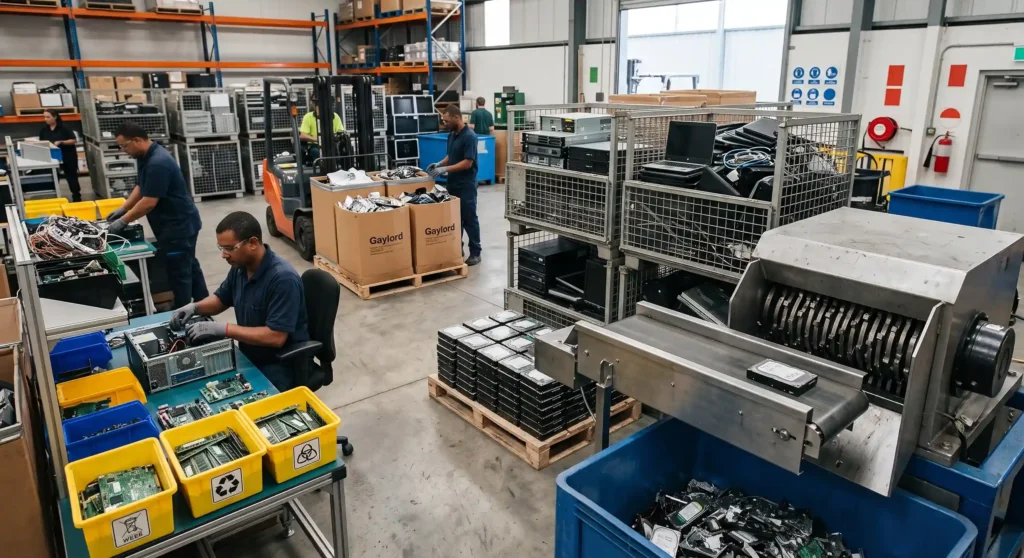
IT recycling focuses on breaking down obsolete electronic equipment and recovering reusable materials.
Typical items processed include:
- Computers
- Laptops
- Servers
- Networking equipment
- Mobile devices
- Storage media
Many organisations seeking IT Recycling Leicester services use recycling to prevent electronic waste from reaching landfill.
Modern electronics recycling processes separate materials such as plastics, aluminium, steel, copper, and precious metals for reuse.
What Happens to Old IT Equipment?
Depending on condition, equipment may be:
- Refurbished
- Reused
- Dismantled
- Recycled
Examples include:
- Computer recycling Bristol
- Laptop recycling Leeds
- Server disposal Nottingham
- Electronic waste recycling Oxford
Environmental Benefits
Proper recycling helps support:
- Reduced landfill waste
- Resource conservation
- Lower carbon emissions
- Sustainable business practices
Many organisations incorporate recycling initiatives into ESG programmes and sustainability reporting.
Concepts such as the Circular Economy and Zero Landfill IT Recycling are becoming increasingly important as businesses seek greener technology management strategies.
ITAD vs IT Recycling – Key Differences
The primary difference between ITAD and recycling is that ITAD focuses on security, compliance, tracking, and value recovery, while recycling focuses mainly on environmental disposal.
Data Security
One of the most significant differences in the ITAD vs IT Recycling discussion is data protection.
ITAD providers typically perform:
- Secure data destruction
- Data sanitisation
- Hard drive wiping
- Physical destruction where required
Many providers follow recognised standards such as NIST 800-88 data wiping Watford requirements.
By contrast, basic recycling services may not always provide detailed data destruction documentation.
Need Secure IT Asset Disposal?
If your Leicester business is replacing laptops, desktops, servers, or other IT equipment, don’t leave data security to chance. Choose a professional ITAD process that can help with secure data destruction, asset tracking, responsible recycling, and compliance documentation.
Talk to Computer Waste about your IT asset disposal requirements and find the right solution for your organisation.
Asset Tracking & Chain of Custody
A professional ITAD programme maintains:
- Asset tracking
- Serial number recording
- Chain of custody documentation
- Compliance records
This level of accountability helps organisations demonstrate compliance during audits.
Value Recovery
ITAD can generate financial returns through:
- IT asset recovery
- Asset remarketing
- Refurbishment programmes
- IT asset buyback initiatives
Examples include IT asset recovery Coventry and IT asset recovery Oxford programmes.
Traditional recycling rarely provides these opportunities.
Environmental Impact
Both approaches support sustainability.
However, ITAD often extends device lifecycles through refurbishment before recycling becomes necessary.
This supports:
- Sustainable IT disposal Cardiff
- Circular economy initiatives
- ESG reporting goals
Compliance Requirements
Businesses handling customer or employee data must often comply with:
- GDPR
- WEEE regulations
- Industry-specific requirements
ITAD providers typically offer stronger compliance documentation than standard recyclers.
ITAD vs IT Recycling Comparison Table
| Feature | ITAD | IT Recycling |
| Data Destruction | Yes | Limited |
| Asset Tracking | Yes | No |
| Asset Recovery | Yes | No |
| Refurbishment | Yes | No |
| Recycling | Yes | Yes |
| GDPR Compliance | Strong | Limited |
| WEEE Compliance | Yes | Yes |
| Certificate of Destruction | Yes | Sometimes |
| Chain of Custody | Yes | Limited |
Why Data Security Matters When Disposing of IT Assets
GDPR Compliance Risks
Improper disposal can expose organisations to significant legal and reputational risks.
Businesses seeking GDPR compliant IT disposal Leicester services often require documented proof that sensitive data has been securely erased.
Data Breaches from Improper Disposal
Retired devices frequently contain:
- Customer information
- Financial records
- Employee data
- Intellectual property
Without secure disposal processes, this information may remain accessible.
Importance of Data Wiping
Examples of specialist services include:
- Data destruction Manchester
- Secure data wiping Birmingham
- Hard drive destruction Sheffield
Secure erasure ensures information cannot be recovered after disposal.
Certificate of Destruction
Many organisations require:
- Certified data destruction Leicester
- Certificates of destruction
- Compliance documentation
These records provide evidence that data has been securely removed.
WEEE Compliance and Environmental Responsibilities
What Is WEEE?
The Waste Electrical and Electronic Equipment (WEEE) Regulations govern how electronic waste is managed and recycled throughout the UK.
WEEE Compliance for UK Businesses
Examples of regional services include:
- WEEE compliant IT recycling Liverpool
- London WEEE recycling
- WEEE recycling Sheffield
Compliance helps organisations avoid environmental risks and regulatory issues.
Supporting the Circular Economy
Modern disposal strategies increasingly support:
- Circular economy principles
- Sustainable IT disposal
- Electronics recycling
- ESG reporting
These initiatives reduce waste while improving environmental performance.
ITAD vs IT Recycling Cost Comparison
Initial Costs
ITAD services may involve additional processes such as auditing, tracking, and secure wiping.
As a result, costs can initially be higher than standard recycling.
Potential Revenue Recovery
The ability to remarket and resell equipment can offset disposal costs.
Examples include:
- IT asset recovery Coventry
- Asset remarketing programmes
- Refurbishment initiatives
Long-Term Business Value
Benefits often include:
- Reduced compliance risk
- Stronger security controls
- Improved sustainability performance
Hidden Costs of Poor Disposal
Potential costs include:
- Regulatory penalties
- Data breaches
- Reputational damage
- Remediation expenses
When Should Leicester Businesses Choose ITAD?
ITAD is generally the better option when organisations need security, compliance, and asset value recovery.
Corporate Offices
Businesses handling sensitive client information often require comprehensive disposal controls.
Financial Services
Financial organisations frequently require detailed audit trails and secure asset disposal.
Manufacturing Companies
Manufacturers often retire large volumes of technology equipment and benefit from structured asset management.
Leicester SMEs
Many Leicester companies and growing organisations use East Midlands IT disposal services to improve compliance and sustainability.
Ready to Dispose of Your Business IT Equipment?
Whether you need ITAD Leicester, secure data destruction, business IT recycling, or responsible disposal of end-of-life equipment, Computer Waste can help you identify the appropriate route for your retired IT assets.
Contact Computer Waste today to discuss your IT disposal requirements and arrange a suitable service for your business.
ITAD for Schools, Universities and Healthcare Organisations
ITAD Services for Schools and Universities
Educational institutions regularly refresh IT infrastructure.
ITAD services for schools and universities help ensure devices are retired securely while maximising value recovery.
ITAD for Healthcare Organisations
Healthcare providers often manage highly sensitive personal data.
Professional ITAD for healthcare organisations services help reduce security risks.
Protecting Sensitive Data
Both sectors benefit from:
- Secure data destruction
- Compliance documentation
- Asset tracking
- Chain of custody procedures
When Is IT Recycling the Better Option?
End-of-Life Equipment
Recycling is often appropriate when assets have no remaining value.
Damaged Hardware
Severely damaged devices may be unsuitable for refurbishment.
Non-Functional Assets
Examples include:
- Business laptop disposal Leicester
- Server decommissioning Leicester
In these situations, responsible recycling may be the most practical solution.
Leicester Market Trends Driving ITAD Adoption
Growing Data Security Requirements
Cybersecurity concerns continue driving demand for secure IT disposal.
Sustainability Targets
More businesses are adopting environmental targets and sustainability reporting frameworks.
ESG Reporting Demands
Investors and stakeholders increasingly evaluate ESG performance.
ITAD can support measurable sustainability outcomes.
Digital Transformation in the East Midlands
Ongoing technology upgrades across Leicester businesses are increasing demand for professional disposal services.
How to Choose an ITAD or IT Recycling Provider
Certifications to Look For
Consider providers with:
- ISO 27001
- ISO 14001
- ADISA accreditation
- NIST 800-88 processes
Questions to Ask Providers
- How is data destroyed?
- Do you provide certificates?
- What tracking systems are used?
- Can assets be remarketed?
Warning Signs to Avoid
Be cautious of providers that cannot demonstrate:
- Compliance documentation
- Asset tracking
- Secure destruction procedures
ITAD and IT Recycling Services Across the UK
Many organisations require services beyond Leicester.
Examples include:
- ITAD London
- IT Recycling Manchester
- IT Asset Disposal Birmingham
- Computer Recycling Liverpool
- Secure IT Disposal Leeds
- Business IT Recycling Bristol
- Data Destruction Sheffield
- IT Asset Recovery Cambridge
- GDPR Compliant IT Disposal Oxford
- IT Equipment Disposal London
- IT Asset Disposal Manchester
- Secure IT Disposal Birmingham
- IT Recycling Liverpool
- Computer Recycling Leeds
- Hard Drive Destruction Nottingham
- Certified IT Recycling Cambridge
- IT Equipment Recycling Services Edinburgh
- Sustainable IT Disposal Cardiff
These regional services help support businesses across the UK while maintaining consistent compliance standards.
Ready to Dispose of Your Business IT Equipment?
Whether you need ITAD Leicester, secure data destruction, business IT recycling, or responsible disposal of end-of-life equipment, Computer Waste can help you identify the appropriate route for your retired IT assets.
Contact Computer Waste today to discuss your IT disposal requirements and arrange a suitable service for your business.
Frequently Asked Questions
What is the difference between ITAD and IT recycling?
ITAD includes data destruction, asset tracking, compliance management, refurbishment, and value recovery. IT recycling focuses primarily on environmental disposal.
ITAD vs recycling for businesses: which is better?
Businesses handling sensitive data generally benefit more from ITAD because it provides stronger security and compliance controls.
Does ITAD include recycling?
Yes. Recycling is typically one component of a complete ITAD process.
Is ITAD required for GDPR compliance?
While GDPR does not specifically require ITAD, organisations must securely dispose of personal data and demonstrate compliance.
What is secure IT asset disposal?
Secure IT asset disposal involves tracked collection, data destruction, documentation, and environmentally responsible processing.
Can businesses recover value through ITAD?
Yes. Many organisations recover value through refurbishment, resale, and asset remarketing programmes.
What industries benefit most from ITAD?
Financial services, healthcare, education, government, legal firms, and enterprises managing sensitive data often benefit significantly.
How do Leicester businesses stay WEEE compliant?
By working with certified providers that process electronic waste according to WEEE regulations and provide supporting documentation.
What certifications should an ITAD provider have?
ISO 27001, ISO 14001, ADISA accreditation, and recognised data destruction standards are commonly recommended.
What is the ITAD process?
The process generally includes collection, inventory management, asset tracking, data sanitisation, refurbishment, remarketing, recycling, and reporting.
Conclusion
When evaluating ITAD vs IT Recycling, businesses should consider more than simply disposing of old equipment. Security, compliance, sustainability, and financial recovery all play important roles in determining the right solution.
For many Leicester businesses, ITAD provides a more comprehensive approach by combining secure IT disposal, GDPR compliance, asset tracking, data sanitisation, and IT asset recovery. Traditional recycling remains valuable for equipment that has reached the end of its usable life, but it typically lacks the broader governance and value-recovery benefits associated with IT Asset Disposition.
Ultimately, the choice between IT Asset Disposition vs IT Recycling depends on organisational priorities. Businesses seeking strong compliance controls, secure data destruction, sustainability outcomes, and asset value recovery will often find ITAD to be the more strategic long-term solution.
Computer Waste Recycling
46 Jellicoe Rd, Leicester LE5 4FN, United Kingdom
0330 341 0785
info@computerwaste.co.uk